
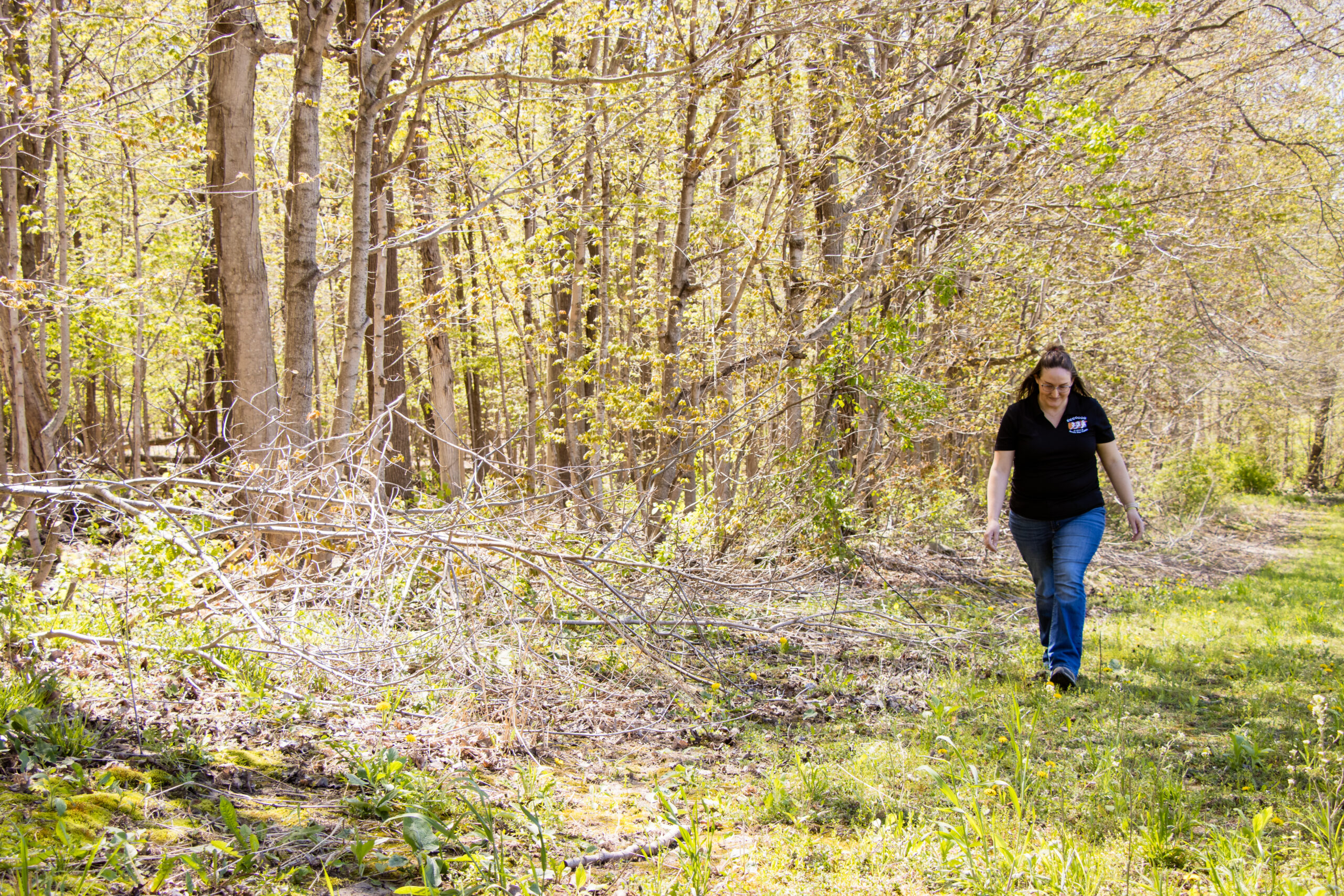
 On her family farm near New Holstein, Kristin Birschbach enjoys evening walks at the edge of the woods with her children. With trilliums on the ground and apple trees stretching into bloom above, she reminds them of the special upbringing farming provides.
“Not everyone gets this,” she tells them. “Your friends don’t get to ride in the tractor after school or see their grandparents every day.”
Kristin, her husband Joe, and their children, Henry (10) and Nora (8), own Seven Star Cattle, LLC, a cow-calf farm raising 75 animals total. With the mission of “building a better farm for the future, one regenerative step at a time”, they are honoring a tradition that has been in their families for a lifetime.
An Upbringing in Agriculture
Kristin grew up on a dairy farm in southern Calumet County until the cows were sold in the early 2000s. At that time, the farm transitioned to cash crops and a custom heifer raising business.
“That’s where I learned to love agriculture and decided that’s what I wanted to go to school for,” Kristin said.
Her husband Joe grew up in northeast Fond du Lac County and lived a similar story, dairy farming until the late 90s before renting their land to the neighboring farm. The couple grew up in the same high school and started dating their senior year. They attended UW-Platteville, Kristin studying soil and crop science and agriculture business, Joe studying agriculture business and accounting.
“I wanted to be a part of agriculture but didn’t have intentions of having my own farm,” Kristin said.
But, as life would have it, fate intervened. The couple built their farm piece by piece, starting with a decision that felt both simple and bold at the time.
“As we were getting ready to graduate, Joe decided to buy three Hereford heifers,” Kristin said. “We kept them at my parents’ place.”
From there, growth came slow and with intention. They moved the cattle to Joe’s parent’s farm near Mt. Calvary in Fond du Lack County, picked up rented ground and stepped into opportunities as they came.
“As the rental contracts came up for the land my in-laws had been renting out, we slowly started renting the land from them,” she said.
Each decision was built on the one before it, turning a small start into a working farm. Today they rotationally graze their cattle, raise corn, soybeans, wheat, and alfalfa, and sell beef directly to customers. They also practice no-till and grow cover crops.
Working Off The Farm
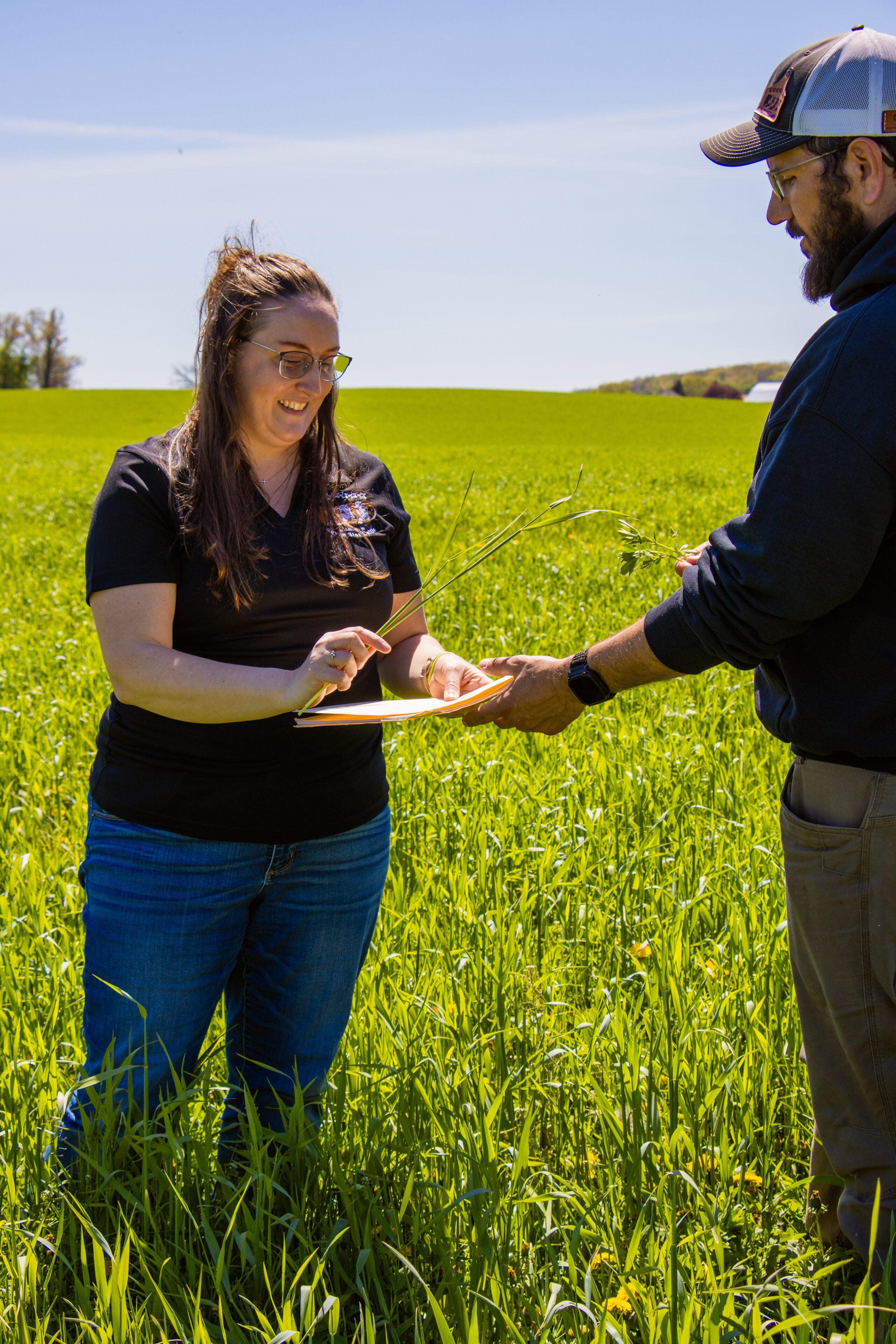 Like many farm families today, Kristin and Joe have off-farm careers. Working off the farm does not pull them away from tradition but rather helps sustain it.
“My husband and I have both worked full-time off the farm the whole time we have been farming,” Kristin said. “Six years ago, I switched jobs to work with the Farm Service Agency for more structure. I appreciate the set hours with FSA and know when it is time to clock in being ‘mom’ when my work day is done.”
While her role on the farm has transitioned from being more hands-on to being more of a support role today, Kristin takes pride in being able to care for the farm and raise a family.
“There are so many different roles of women in agriculture,” she said. “I am honored to show my kids how to be caretakers of the land.”
For Kristin, raising kids in agriculture gives them a foundation. They are learning what it means to show up, help others and appreciate resources, but Kristin is careful to make sure those lessons doesn’t come with strings attached.
“My kids know they don’t have to come back to the farm; there are many ways to still be part of that community,” she said.
Honoring Tradition
To her, tradition isn’t something you force but rather something you live out. It’s a mindset that shows up through Kristin’s Farm Bureau involvement. As a Calumet County Farm Bureau board member, Kristin helps lead efforts like the Farm Bureau food stand at the Calumet County Fair. The funds she helps raise support important initiatives like Classroom on the Farm, where hundreds of fourth graders get a hands-on look at agriculture.
“We work raise money and it is rewarding to turn it into community support,” Kristin said.
Whether it’s a walk in the woods, late-night calving check or day spent at a community event, Kristin hopes the traditions her children carry forward is rooted in values, not pressure. Because in the end, the most important traditions passed down on a farm are caring, showing up for others and choosing to be part of something bigger than ones’ self.
Written by Cassie Sonnentag. This story is a part of Wisconsin Farm Bureau’s coverage of the International Year of the Woman Farmer.

Leave a Reply